


Chest pain can manifest in various ways and can range from mild discomfort to severe, crushing sensations. While it's natural to immediately think of a heart attack, chest pain can stem from a wide array of causes, including issues with the lungs, digestive system, muscles, ribs, and even anxiety.

Chest pain is very common in children and particularly in teenagers.
In children who are otherwise healthy, most chest pain is NOT related to the heart. This is very different from chest pain that can be seen in adults which may be related to the heart.
There are many structures in the chest including the heart, lungs, bones, muscles, joints, nerves, and skin. Pain can be from any one of these structures being affected. Brief episodes of chest pain are usually NOT caused by the heart or the lungs. Most often brief episodes of chest pain are caused by irritation or inflammation of the ribs, chest wall muscles, or joints. This type of chest pain most often feels like a sharp or stabbing pain and can sometimes be reproduced by pushing on affected areas of the chest. You may hear this called “musculoskeletal” chest pain, which is pain caused by the muscles or bones in the chest.
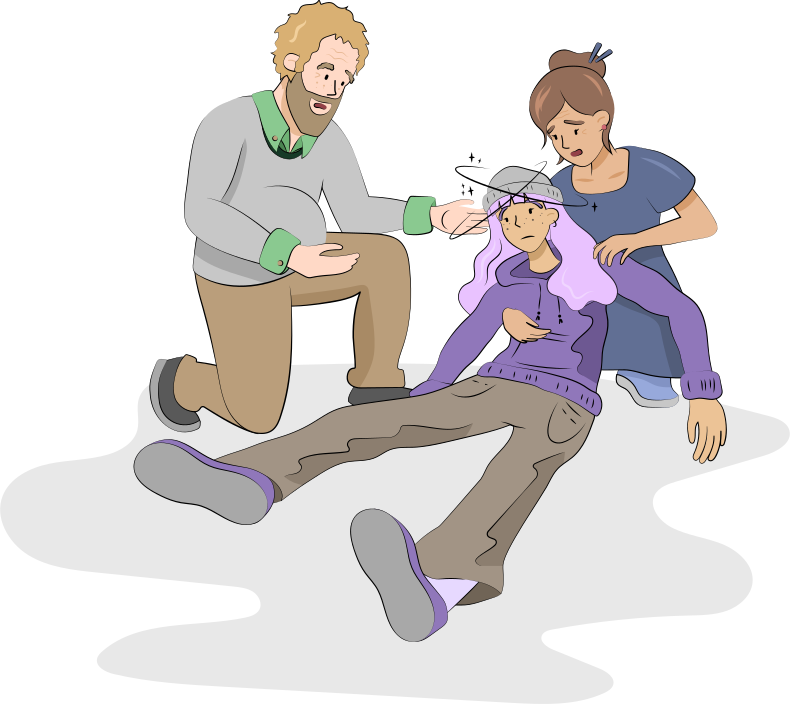
More serious chest pain that could be from the heart feels different. This kind of chest pain may be triggered by physical activity and be longer lasting. Other symptoms may be present at the same time as the chest pain including fever, shortness of breath, dizziness or fainting.
Other causes of chest pain may include pneumonia (lung infection), acid reflux from the stomach into the esophagus (“heart burn”), coughing or asthma, or as a physical response to stress or anxiety.
Things that you can try include:
If you are worried about your child’s chest pain, it is reasonable to see a doctor. If your doctor is worried about the cause of the chest pain, they may send you/your child to see a pediatric cardiologist.
Reasons to see a pediatric cardiologist include:
If the doctor determines that the cause of the chest pain is not likely related to the heart and seems to be musculoskeletal chest pain, then seeing a pediatric cardiologist is not needed.
If you have been seen by a pediatric cardiologist and told that the chest pain is not related to the heart, follow and be reassured by the advice from the hospital.