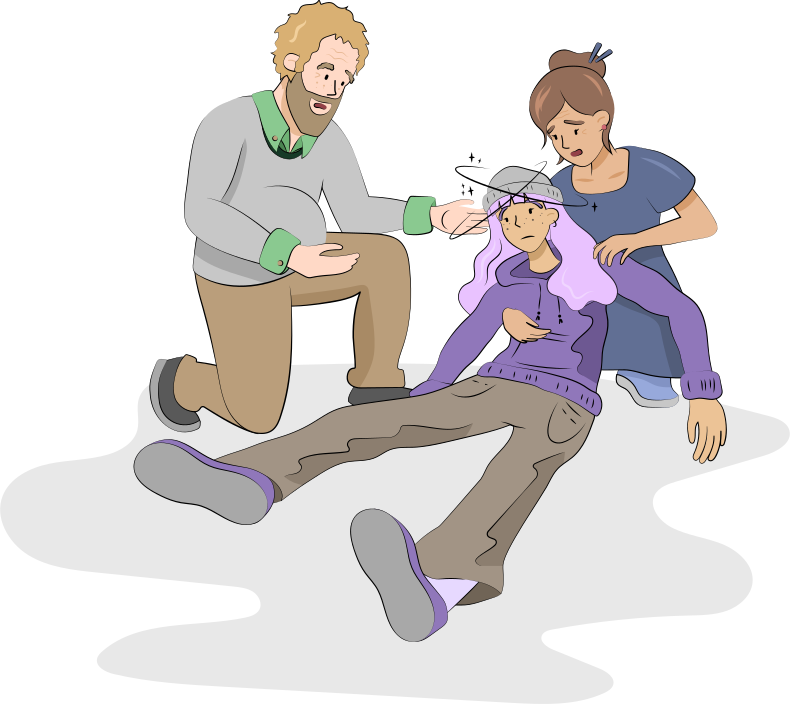




Syncope, commonly known as fainting or "passing out," is a temporary loss of consciousness and muscle control due to a sudden, brief decrease in blood flow to the brain. Most fainting episodes are harmless and can be avoided using the tips and tricks below. Rarely, fainting can indicate more serious underlying medical conditions, especially if it is unpredictable or in the middle of exercise.

There are many different triggers that can cause a fainting episode, these include:
It is common to have “warning signs” before fainting, these include:
It is also common for others to observe some stiffening or seizure-like activity while you are unconscious. It is common to feel tired after fainting.
As soon as you feel like you may faint:
Recovery is often quick, but some people may take longer to recover than others. It is normal to feel weak or disoriented afterwards. This will get better in time.
There are simple ways to prevent fainting. Some strategies include:
If you have another similar type of fainting episode that does not result in an injury, it is not necessary to go to the hospital or to call 911.
In a very small number of children, fainting may be caused by a reason other than vasovagal syncope. You need to see your physician if: